

Editor’s note: This profile is part of our 11 Women to Watch in Science package.
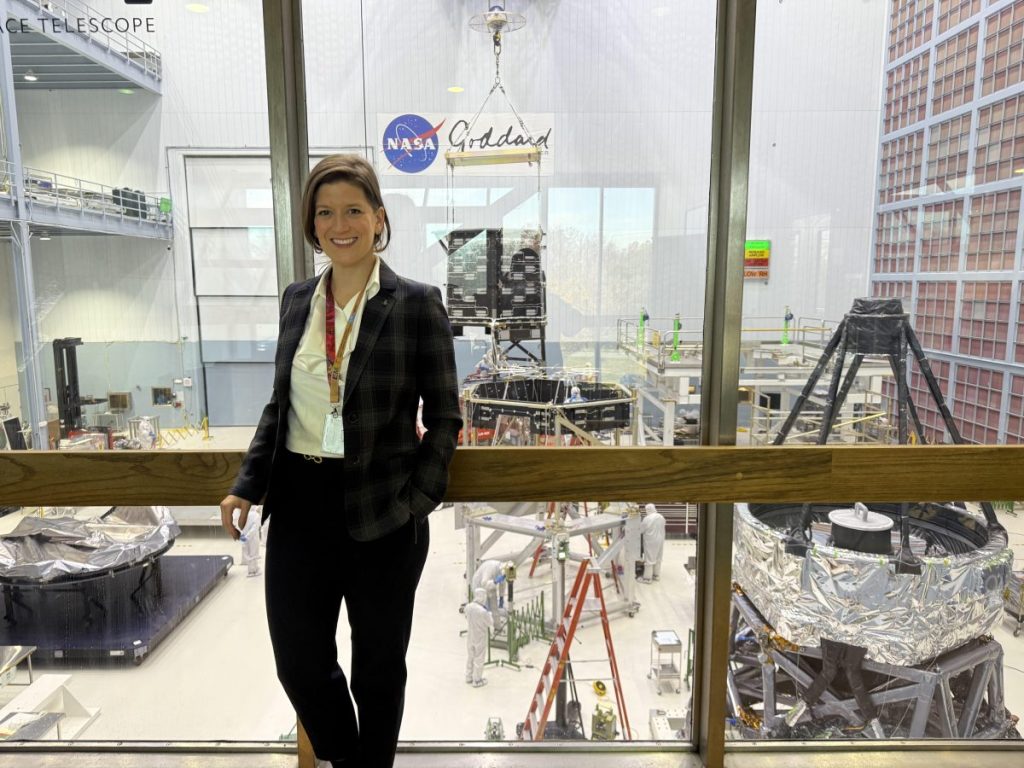
Rebecca Peters’ first job back in high school was at the Mountain Restoration Trust in Southern California, working to clean up local streams and record data for citizen science projects. It’s a far cry from her current day job – leading 1,400 researchers at NASA’s Goddard Space Flight Center – but it cemented her interest in coming up with real-world solutions to the water crisis.
In her home state, “I observed the world’s fourth largest economy, powered by Silicon Valley innovation and unprecedented access to data and technology, struggle with environmental challenges that scientists had long predicted and could help address,” she says. “Initially, my interests focused on addressing California water issues” – such as those in her own backyard, scarred by drought and floods – “despite decades of climate modeling and risk assessment that should have enabled better preparation and response.”
But it was on a trip to Guatemala that Peters, who also teaches science at Georgetown University, saw such abject poverty and destitution that she decided to address the systematic inequality created by climate change. “I came to see how achieving ‘water for all’ is not just a technical challenge for scientists and engineers, but a significant legal, political and social problem,” she says. “I chose to expand my skillsets and horizons to work across borders, cultures and languages.”
Today, Peters’ work in applied science (the use of scientific knowledge to solve practical problems) includes monitoring droughts, making long-term meteorological forecasts and tracking change in Arctic sea ice, typically by leveraging NASA’s Earth Observing Satellite missions. In short, Peters turns NASA data into tangible action, particularly for those global communities hit hardest by global warming. She has worked in rural Bolivia to help improve water availability for schools, and in Guatemala to bring clean water to village communities – and, she has witnessed the health benefits safe drinking water can provide.
Peters, who is also an alum of the Aspen Institute’s Policy Academy, admits that her primary challenge is an internal one. “I’m learning how to drive impact sustainably over the long term without burning out or overextending myself,” she says.
Although, that didn’t stop her from rowing the Zambezi River in Africa from source to sea in 2024, across crocodile-infested waters, rapids and malaria zones. “Living with limited internet or electricity forced me to reevaluate what it means to lead and connect,” she says of the experience. “The expedition taught me that effective fieldwork is less about having the right answers, and more about creating the conditions for others to thrive — especially in unpredictable, high-pressure circumstances. This kind of awareness cannot be taught in a seminar room; it has to be lived in the field.” ◼️