

Editor’s note: This profile is part of our 11 Women to Watch in Science package.
Soils hold more carbon than the plants in the ground and the atmosphere combined – a fact that Paige Stanley repeats often. That makes soils an important part of the efforts to curb climate change, because properly managed soils keep carbon in, while poorly managed soils let carbon out. Stanley researches how changes in grazing management can help soils absorb carbon and keep it locked in.
The United States has about 800 million acres of grazing land, most of it located west of the Mississippi river. These landscapes used to feature native grazers like bison, deer or antelope, Stanley says – but cows are now the primary animals there. If managed poorly, the animals can overgraze the land and release soil carbon into the atmosphere. Better practices include moving cows around and letting land rest, essentially mimicking how it was before Western settlers moved in and impacted how grazers like bison naturally moved. “We’re kind of trying to replicate that native behavior, trying to restore some of the benefits that once led to the really amazing soil carbon stocks, biodiversity and wildlife benefits,” Stanley says.

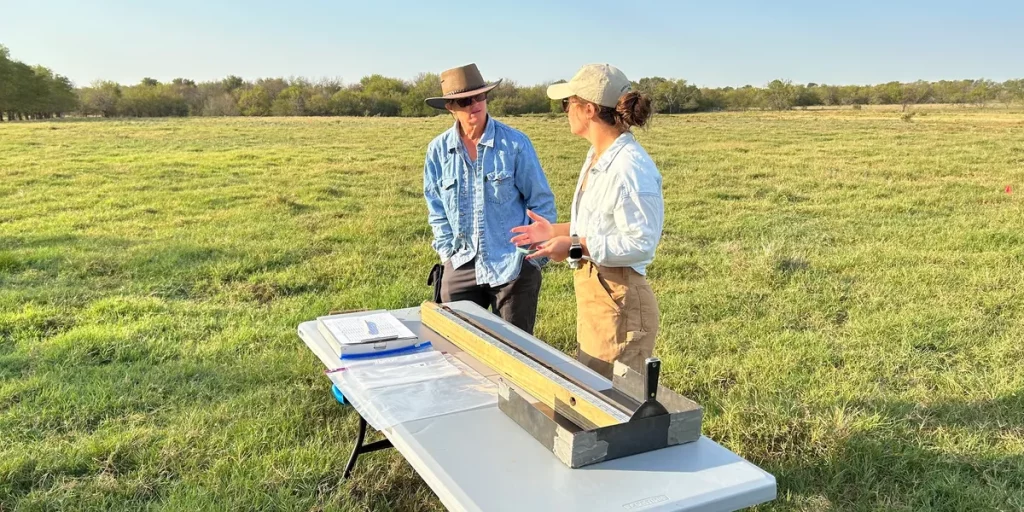
To understand what’s happening under the ground, Stanley takes a lot of soil samples – she works in four controlled experimental grazing sites, and 59 real-world working farms and ranches spread across U.S. grazing regions. But she also translates science back to the people working the land: The ranchers. She is as comfortable sitting with them on a porch as she is in an academic conference room, and it shows – part of her degree is in rancher sociology. “The beef industry is not ranchers,” she says. “A lot of ranchers are really trying to do what’s best.”
Stanley grew up in rural Georgia, and started her academic career as a cell biologist. Eventually, she found her passion in a food and agriculture ethics course at Georgia College & State University, during a discussion about the environmental and animal welfare impacts of the livestock industry. “Lightbulbs went off,” she says, when she thought about the simple act of eating, and the way it had huge impacts on everything around her.
Now a rangeland agroecologist – a scientist who integrates ecological principles with rangeland management – at Colorado State University, she is also a research fellow on a project called 3M (“metrics, monitoring and management”). The five-year project, which looks at how grazing management influences a variety of ecosystem functions, has 80 scientists working with ranches and farms across 12 disciplines. The goal is to reveal the connections between soil health and greenhouse gases, biodiversity and productivity, Stanley says. “In the next few years, we will finally be at that point where we have the first really large data set of soil carbon from grazing management over time.”
Ultimately, she wishes that more people knew that there’s a lot of nuance and grey area in our food systems. Many people think that cows grazing on land isn’t great for the land – but if managed well, it can be a healthier way to treat soil than growing crops. “Not all grazing is created equally,” she says. ◼️