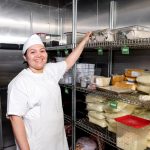

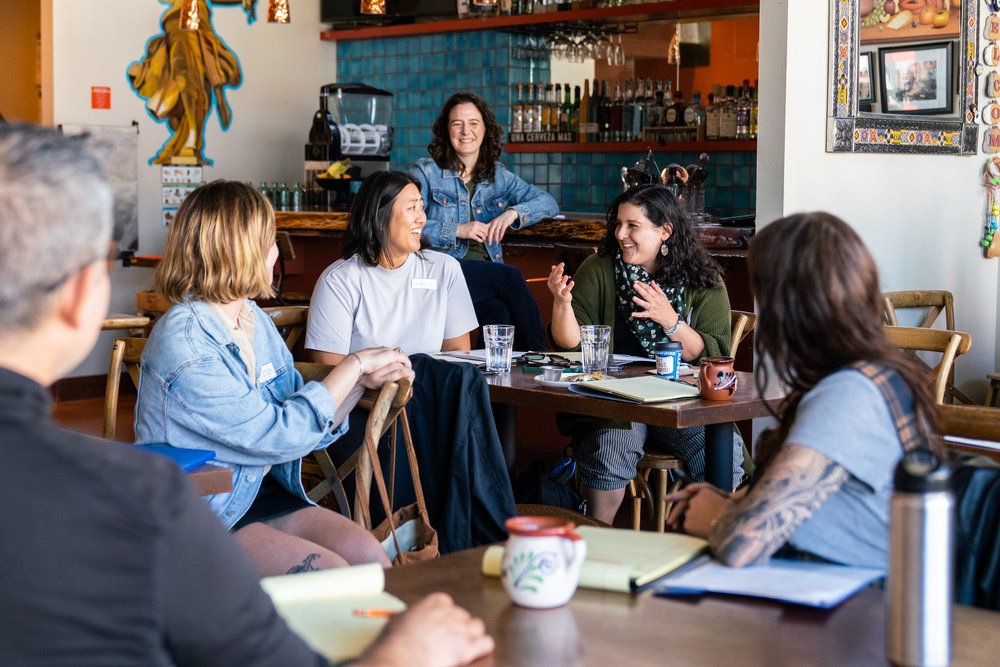
For the past 20 years, La Cocina, a nonprofit incubator based in San Francisco, has been a haven for immigrants and under-privileged women looking to launch food businesses.
And it’s helped dozens of them get off the ground since its beginnings as a test kitchen hosted by a cohort of community organizations. In the past two decades since its launch, more than 150 businesses have gotten their footing through La Cocina’s startup program, with over 90 of them still operating to this day – despite women business owners throughout the U.S. continuing to struggle to stay afloat as critical startup and growth resources elude them.
La Cocina’s success stories include Cambodian eatery Lunette, which was featured on “Netflix’s Chef’s Table: Noodles” and whose owner, Nite Yun, was named a 2025 James Beard Award semifinalist for Best Chef; and Alicia’s Tamales Los Mayas, a Mexican establishment run by Alicia Villanueva that grew from door-to-door tamale sales to partnering with Alaska Airlines.
La Cocina’s staff and volunteers, many of them food-industry veterans, have also supported hundreds more of these business owners through remote consultation services. The organization’s drive, and results, recently won La Cocina the 2025 Basque Culinary World Prize.
Leticia Landa, its executive director – the daughter of Mexican immigrants, herself – says that there is now “extra symbolism and extra weight to having this very global, public recognition for two decades of work.” Work based on a simple guiding philosophy: “Entrepreneurship being something that should be available to everyone, particularly in the context of the food industry.”
She continued: “Every day, I come to work, and I feel the importance – not just in San Francisco … but widely and broadly.”
Lifting Up Women Who Need It Most
Immigrant communities are under particular strain at present, as U.S. Immigration and Customs Enforcement (ICE) continues to grow its ranks, launch new sweeps in more communities, and is now asserting an ability to enter homes without a judge’s warrant. Public scrutiny of the agency, which is tasked with enforcing immigration policies, has grown following the shootings of Minneapolis residents Renee Good and Alex Pretti by members of its ranks – their killings being just two of numerous injuries and deaths reported among ICE detainees and protesters.
In San Francisco, a sanctuary city, hundreds of protesters have marched in solidarity with Minnesotans, and with Bay Area residents who have been targeted by ICE. Landa, too, is vocal about her support for immigrants. “I feel a real sense of importance around protecting our community,” she says, adding that she will talk about the varied, thriving businesses she sees growing through La Cocina “to counter the current climate” whenever the opportunity arises.
She added: “La Cocina works with immigrant women and women of color – who have always been excluded from our economy. We have done this for 20 years, and we will continue to do so,” no matter what.
It’s not the only broader, social challenge the organization has faced in its existence.
To be sure, La Cocina has seen great successes, from the overall growth of the incubator program to the publication of a cookbook full of clients’ recipes and startup stories – offerings that have been funded by a mix of donations and corporate-backed grants.
But the organization also weathered the spread of Covid. “It all stopped,” Landa recalls of the restaurant world when the pandemic first hit. About 10% of all eateries in the U.S. wound up closing due to lockdowns and other Covid mitigation measures. But, Landa proudly adds, all of the restaurants that went through La Cocina’s program survived the tumult.
And throughout these many ups and downs, the heart and soul of the mission has remained the same, she says. The plan going forward? “More of the same.”
Well, with more growth, that is. In addition to welcoming new would-be entrepreneurs, Landa would like to continue sharing her program’s curriculum with more online clients. And, she continually advocates “for the importance of small-food businesses in the context of city building,” making sure San Francisco officials keep ventures like those run by La Cocina’s alumnae in mind when revitalizing downtown areas or sourcing food contractors for city events.
Such positivity and solidarity “counters the bigger picture,” Landa says, and she feels fortunate “to be able to push for the things we value as a city” through her work – “to celebrate how awesome this place, and its people, are.” ◼️