

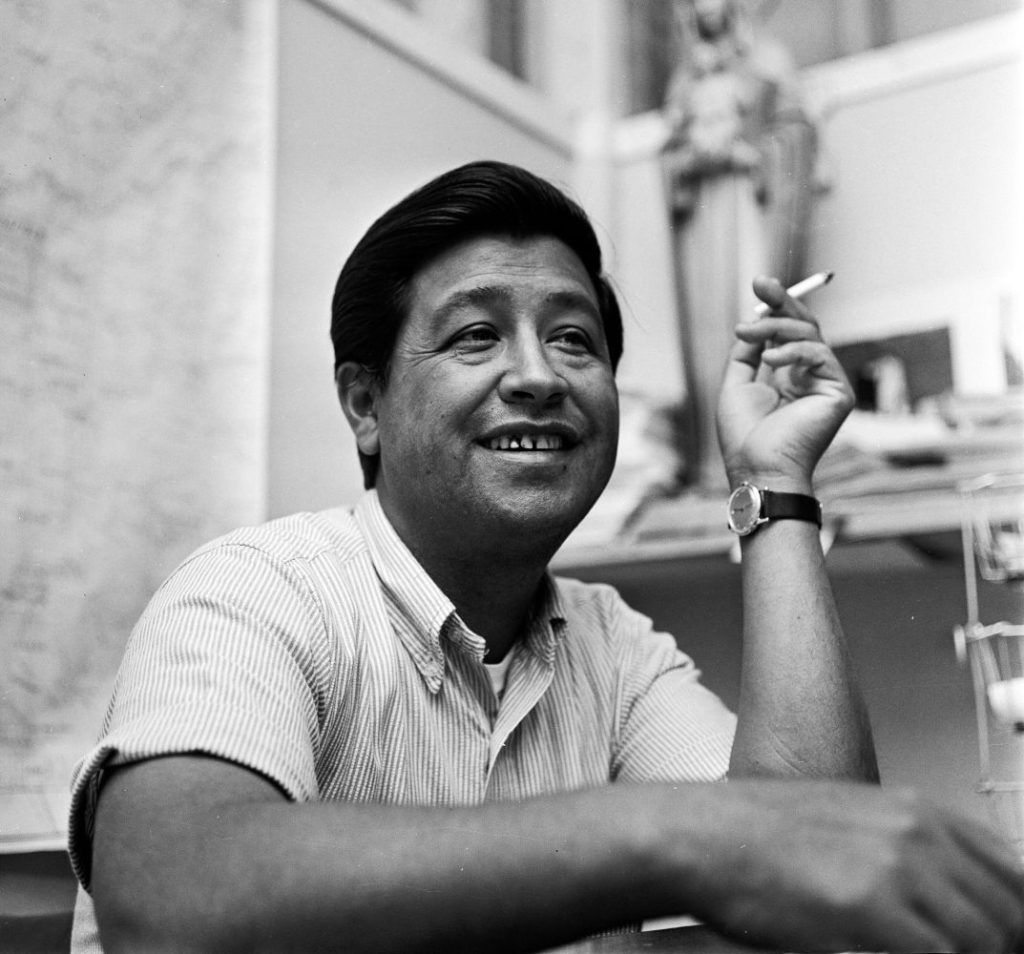
Cesar Chavez, a former leader in the movement to secure better working conditions for farmworkers throughout the U.S. – a man widely regarded as a civil-rights hero – has been accused of assaulting a number of the girls and women who once worked alongside him.
In a bombshell report published by The New York Times this week, former labor movement activists Ana Murguia and Debra Rojas said that Chavez abused them numerous times in the 1970s – when they were still young girls, and he was a man in his 40s.
Both women are now 66, but they still recalled to the Times the instances when they marched with their mothers, and with Chavez himself, in support of the labor movement he led. And, they recalled experiences away from the streets, in the privacy of Chavez’s locked California office or in motel rooms on the road, where they say he repeatedly sexually assaulted them.
There were elements of mental and emotional manipulation, too, the survivors said. Rojas recalled Chavez telling her that “I Only Have Eyes for You,” the Flamingos’ 1959 hit song, was theirs, and that Chavez implored her to “just remember that I love you” whenever she heard it. “He did his grooming very well,” she noted. “He should get an Academy Award for all he did.”
Murguia added that the trauma of it all was such that she had attempted, several times, to take her own life by the age of 15. “I wanted to die,” she explained simply.

Hours after the Times published its piece, fellow labor rights leader Dolores Huerta, who worked closely with Chavez, released her own statement – in which she spoke of previously undisclosed rapes at Chavez’s hands.
“The first time, I was manipulated and pressured into having sex with him, and I didn’t feel I could say no because he was someone that I admired – my boss, and the leader of the movement I had already devoted years of my life to,” she said. “The second time I was forced, against my will, and in an environment where I felt trapped.”
Huerta added that the rapes resulted in two pregnancies – which she carried unbeknownst to anyone around her, before arranging for those children to be raised by other families “that could give them stable lives.” She continued: “I had experienced abuse and sexual violence before, and I convinced myself these were incidents that I had to endure alone and in secret.”
Her decision to speak now was inspired by Murguia and Rojas. “The knowledge that he hurt young girls sickens me. My heart aches for everyone who suffered alone and in silence for years.”
Along with Huerta, Chavez was a co-founder of what would ultimately become the United Farm Workers labor union. Through a variety of nonviolent demonstrations, from picket lines to organized boycotts, they vied for the protection of farmworkers who had, until that point in time, endured long hours completing grueling tasks with inadequate tools, without proper pay or even adequate bathroom facilities offered in exchange. This work resulted in the passage of legislation that better protected farmworkers, and ensured them collective bargaining rights.
He died in 1993, at the age of 66.
Following the Times article and Huerta’s statement, Chavez’s surviving family issued words of their own. “This is deeply painful for our family. We wish peace and healing to the survivors and commend their courage to come forward. As a family steeped in the values of equity and justice, we honor the voices of those who feel unheard and who report sexual abuse.”
Political and university officials throughout the nation, meanwhile, were quick to distance themselves from Chavez’s legacy by covering statues, taking down portraits and initiating the processes of renaming the many streets, parks and more that currently bear his name. Los Angeles mayor Karen Bass said in a statement to the Times that Cesar Chavez day would be renamed “Farm Workers Day.”
Not everyone followed suit, however. In the aftermath of the disclosures, some took to social media to defend Chavez – accusing Huerta and others of being opportunistic, discrediting Huerta in particular as a reliable narrator, and even insinuating that the accusations are part of an attempt to “cancel” Chavez retroactively over his radical views opposing illegal immigration.
Former television personality Geraldo Rivera issued his own statement lamenting that the women’s accusations, while “horrifying, if true,” have “attacked” Chavez’s legacy. “Given how these scandals permanently taint the person’s reputation and record, sometimes unfairly, Latinos are losing the cherished memory of a great, if perhaps imperfect man,” he posted on X.

And, there were many who inquired as to why the victims waited to report. It’s worth noting that the Times had been investigating the story since 2021, ensuring its veracity ahead of publication. But Huerta’s statement also addressed that specific question: “I carried this secret for as long as I did because building the movement and securing farmworker rights was my life’s work,” and she did not want to see it undone by news of Chavez’s wrongdoing.
Women are often expected to suffer in silence when they are harmed by men who are heralded as heroes – or even just men whose work the public enjoys. Most of them do so, with experts estimating that some 80% of rapes and sexual assaults go unreported.
For those that refuse to remain quiet, research shows that there are consequences. A study published earlier this year on the experiences of survivors who disclosed abuses by men in entertainment during the #MeToo era found that they suffered myriad forms of public backlash against them for speaking out. And, survivors of deceased sex trafficker Jeffrey Epstein and his network of abusers report receiving death threats for their disclosures.
In Chavez’s case, there is something particularly insidious about others insisting upon, even demanding silence from these women – ones who were called comrades by him in the fight for progress in public, while being harmed repeatedly by him behind closed doors. It’s a phenomenon that is not at all unique to Chavez or his cause.
But, as Huerta noted in her statement: “The farmworker movement has always been bigger and far more important than any one individual.” These men may falter and fail, but the work of progress is still carried forward – often by women, and often while they simultaneously hold more than we realize. ◼️