

When it comes to unpaid labor, women are still doing the bulk of it.
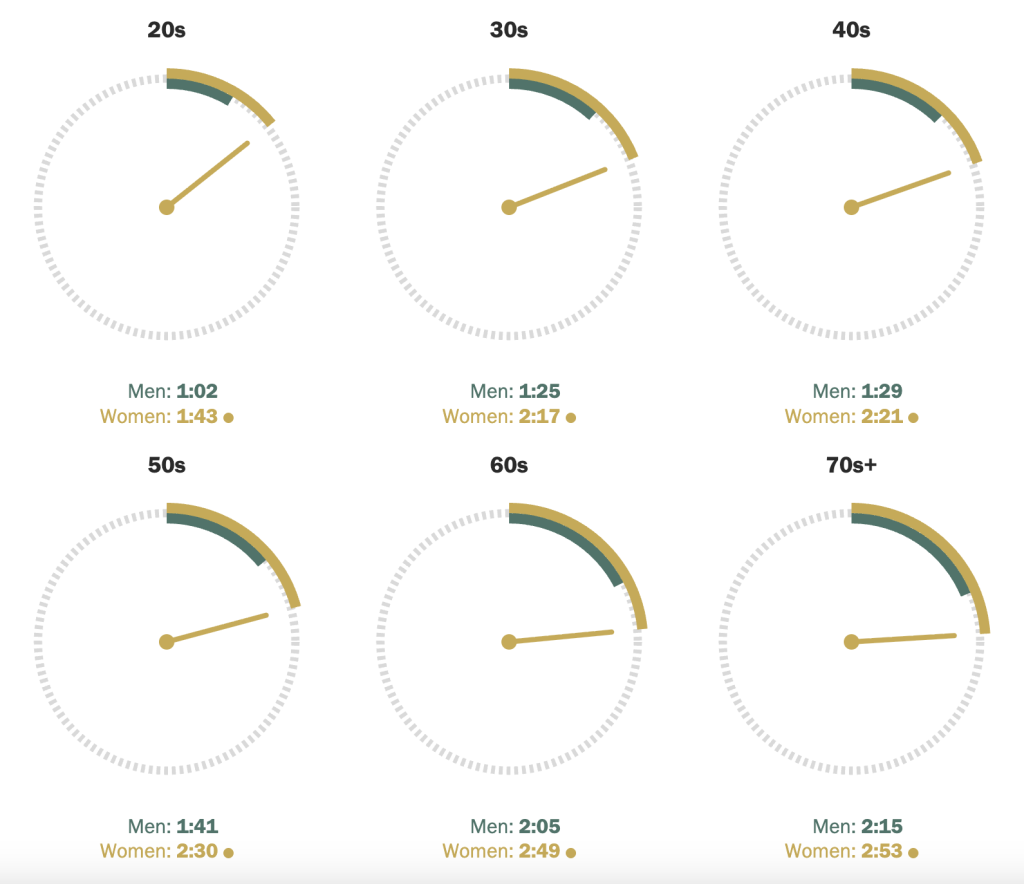
A recent survey published by the Pew Research Center dove into the ways in which men and women spend their time, examining how much of an average day is dedicated to sleeping, eating, working – and yes, taking care of the household. Researchers then broke down the findings by age group, organizing respondents in their 20s, 30s, 40s and so on.
In some regards, such as the amount of time spent socializing, men and women are fairly aligned. But when it comes to chores, women are doing significantly more of them – at all ages.
For example: Men in their 20s report spending, on average, about an hour a day on housework. Women in their 20s say their average is closer to one hour and 45 minutes. In each age group, a disparity of close to an hour was found, with women always taking on the large shares.
These findings mark the continuation of a slightly waning, yet decidedly persistent disparity between men and women regarding who handles chores. Indeed, other studies in recent years have shown that women are still doing most of the cooking, child- and elder care, and more – and it’s draining us.
“Half of women say their stress levels are higher than they were a year ago, and a similar percentage say they’re concerned – or very concerned – about their mental health,” researchers at financial services company Deloitte wrote in a 2024 study on the subject.
Younger women in their 20s, 30s and 40s – who, as Pew’s new survey showed, are still grappling with these inequities, and sometimes in larger amounts than older women – are also carrying larger portions of caregiving duties. Women in their 30s, especially, are shouldering nearly an hour more of such responsibilities per day, on average, than men their age.
Which is, perhaps, why they are increasingly turning to an alternative: Avoiding long-term relationships with men altogether. Data from 2025 shows that women are buying homes, raising children and more without male partners in their lives – because they can, and because it is, to them, a preferable alternative.