

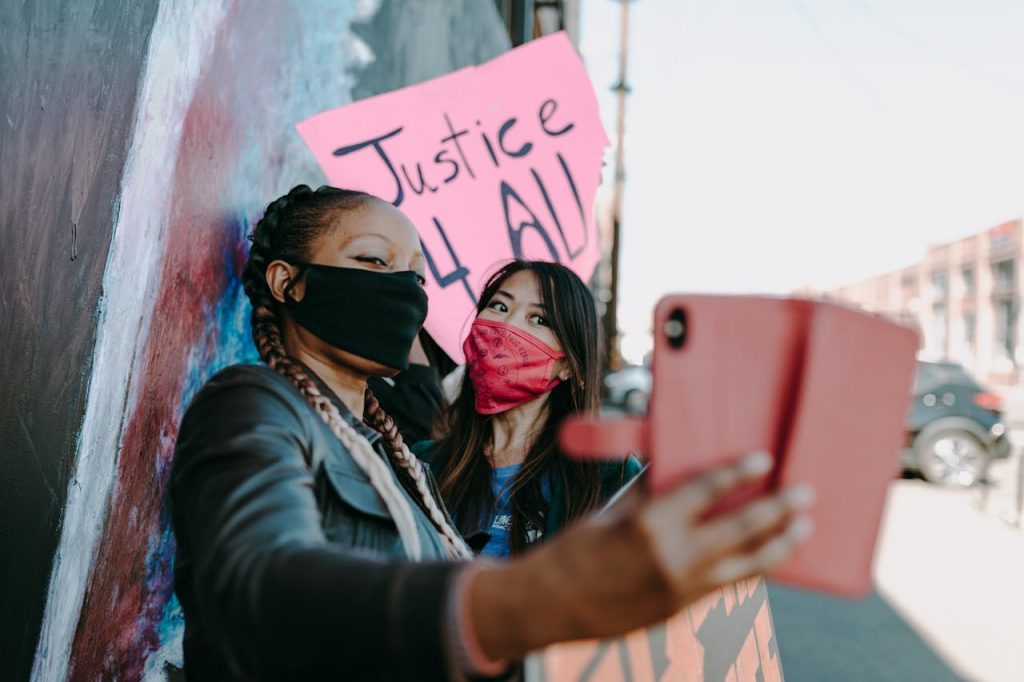
Americans recently took broad collective action for a test drive, for the first time in a long time.
People throughout the nation engaged in an “economic blackout” on Feb. 28, in which they avoided purchasing anything at all – an act of protest against the most powerful and corporate-minded among us, expressed through how we did not spend our hard-earned dollars that day, coordinated by a grassroots movement called The People’s Union USA.
But as word of the effort spread on social media, some responded to the invite by criticizing it – or outright mocking it. Such forms of political engagement are often dismissed as “slacktivism” or “hashtag activism,” defined as acts of dissent that are conducted via online petitions or social media posts, which some feel are inherently lazy and low-stakes.
But here’s the thing: No one expects a one-day blackout to tank the economy. And no one is saying that one day of anything is going to turn a tide. But we need to start somewhere.
We are not France in the late 1700s. We are working uphill in a nation that functions on capitalism and prizes individualism – and always has. The obligations our society places upon us to earn – and spend – drain us, and keep us apart. Not only that, we are deeply sad, and bone-tired on a societal level. How do you galvanize such a group into mass action?

Yet this particular action did get people excited. Better yet, it encouraged broader thought about the impacts of our actions and spending habits. It got people talking with one another about such concepts – and asking others to engage in similar forms of consideration.
I appreciate that this feels frustratingly slow to some, as progress goes. But these are good things I’m describing. And when we are trying to build our own machine out of a people who have been wrenched from, and sometimes even pitted against one another… we must adjust our expectations of what it looks like to rally the masses. At least, to start.
Ripples Must Become Waves
Let’s be clear – we must go further down this path, in order to realize visions of a better world.
But that’s why the blackout was always intended as a beginning call to action, rather than an end point. (And, it was always bigger than any one person, including an embattled leader.) Subsequent boycotts are planned, with more specific targets (including major retailer Target) in mind. More Insta-friendly protests and marches are in the works too, including over 200 Women’s Marches planned throughout the nation on March 8, aka International Women’s Day.
Research shows that online-based activism can make a difference – as long as it’s paired with such real-world, continual actions. Sharing an infographic or participating in a one-day effort will not spark the change we need, experts say – but as a means of organizing ongoing efforts, driving social narrative and creating mass consensus, such moves can be quite energizing.
But in general, the more we bring people together to demonstrate collective power – and to demonstrate our ability to gather in the first place – the better our fight will go. And, in a country run by autocrats, all of it matters. Indeed, the people who now govern the nation are actively working to make us dumber, more frightened, more miserable and generally overwhelmed. This makes us easier to control – and easier to keep apart.
Everything we do to combat that is a win.
We are in this together – and the more we lean into that, in whatever ways we can that de-center individual objectives, the more powerful we become. It’s true that our leaders won’t care about our displeasure. But they do and will care about our dissent – especially if we allow it to grow. ◼️