

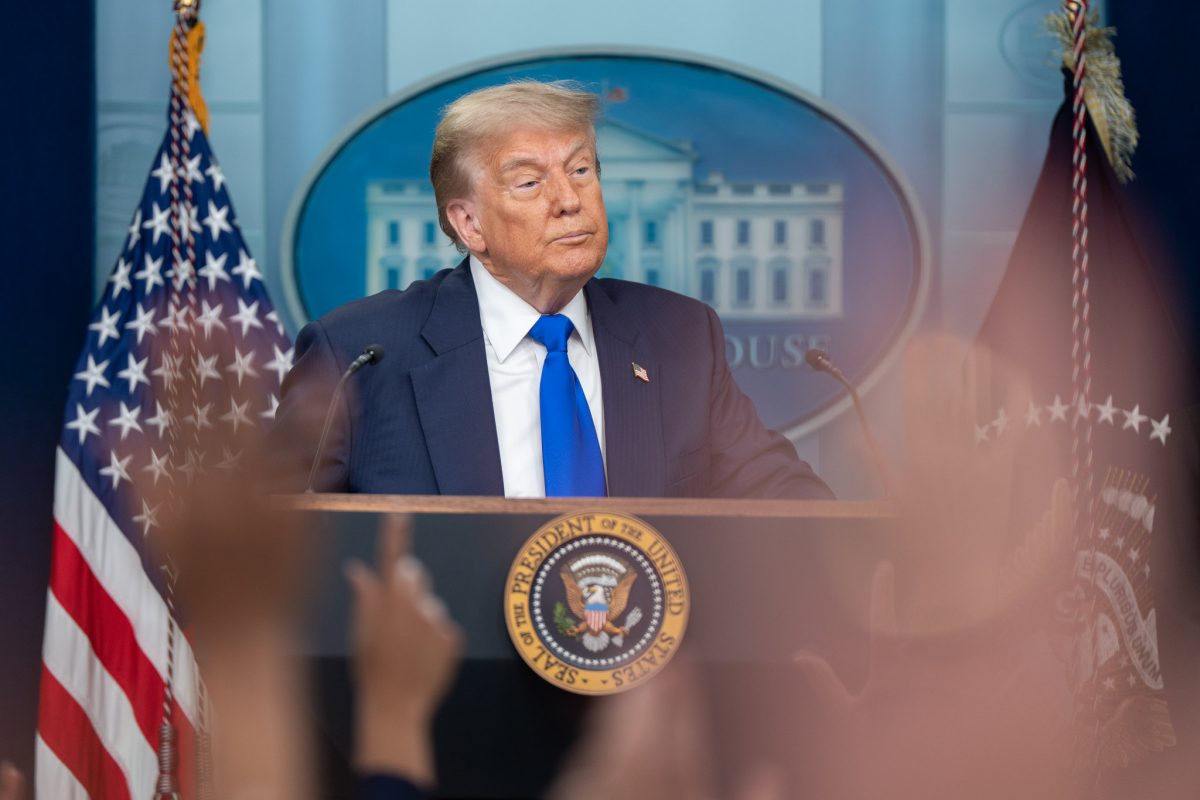
Last week, President Donald Trump’s “big, beautiful bill” became the law of the land.
The White House calls the new law, signed by Trump last Friday following narrow House and Senate wins, a delivery on a “commonsense agenda” that offers, among other things, “the largest middle-class tax cut in history, permanent border security, massive military funding and restoring fiscal sanity.”
A roughly-1,000-page monster, his signature piece of legislation is actually, in many ways, a realization of Project 2025 – the suite of policy proposals written by conservative think tank The Heritage Foundation that Trump tried to distance himself from during the run-up to Election Day 2024. Chief among the overlaps: The targeting of Medicaid and Medicare, as well as food-assistance programs, and further restrictions on abortion and reproductive care.
American billionaires, meanwhile, will enjoy tax cuts in the trillions; U.S. defense forces will receive a whopping $157 billion boost; U.S. Immigration and Customs Enforcement will get a hefty $45 billion infusion, giving it a bigger budget than most other nation’s whole miliarities.
Most of these shifts won’t take effect immediately. In fact, some won’t take full effect until as late as 2034 – which means the negative impacts won’t be felt, in large part, until after the 2026 midterm elections. But they will be implemented eventually. And when they are, America’s women will be hit the hardest. (As if medical care were so great for us to begin with.)
Thankfully, America’s women have also been hard at work addressing the pain points that will be worsened, the needs that will be deepened, and the harms that will be suffered in the days and years ahead by this bill’s passage. Below, we briefly break down the biggest health-related parts of the new law, and the ways in which women will be disproportionately impacted – while offering just a few of the many existing examples of women-run programs fighting the ever-rising tide of inequity.

1. Medicaid Cuts
The government-backed health-insurance program for low-income families and disabled individuals – the majority of recipients being women – will lose about $1 trillion in federal funding over the next 10 years. Experts say that at least 10 million people will lose coverage as a result in that time frame, with yet more to be hurt in the state-level budgeting fallouts to follow. Women in rural and remote regions of the U.S., already suffering from a lack of proper healthcare access, are expected to be affected the most – along with their children.
A Woman Who’s Helping: This especially strained portion of the U.S. has been a focal group for the Morehouse School of Medicine in Atlanta, which has begun training its students to work specifically in rural regions. “We’re developing a workforce that’s going to be out there, providing the support that Black women and birthing people need,” said Natalie Hernandez-Green, executive director of the Morehouse School of Medicine Center for Maternal Health Equity.
2. Medicare Cuts
About 55% of those on Medicare – the federal health-insurance program for Americans ages 65 and older – are women. This bill will bring about half a trillion dollars in cuts to the program, starting next October (before the impacts can be felt, and Republicans’ re-election campaigns can be impacted, of course). Experts say around 17 million people will lose coverage as a result. But much like their younger, low-income cohorts, older American women are also already grappling with generally substandard care – a problem these cuts will only exacerbate.
A Woman Who’s Helping: Offerings such as The Pause Life, a site launched by menopause influencer Dr. Mary Claire Haver, are helping older women find both the information and medical resources they need to age healthily. “Forty percent of [women] are in menopause in this country right now … and we’re getting just maybe 5% of the education and research dollars,” she told The Story Exchange of the already-significant issue.

3. SNAP Cuts
The U.S. Supplemental Nutrition Assistance Program helps some 42 million Americans with affording groceries and household necessities – the majority of them, too, are women. Trump’s new law will decrease funding for it by around $186 billion, which will cause several million people to lose access to SNAP, experts say. It will also impose increased work requirements upon recipients, which is likely to kick another 2 million people off of the program. Plus, women comprise the majority of household shoppers (78%), which means this will come with a mental toll, as well as a physical and logistical one.
A Woman Who’s Helping: In Mississippi, a guaranteed-income program called The Magnolia Mother’s Trust is helping Black moms in charge of caring for their families by giving $1,000 per month – no strings attached – to 100 recipients selected by lottery, for one year. It’s a bid to ease the “complications in their lives that could be solved with more cash on hand,” including grocery needs, Dr. Aisha Nyandoro, who spearheads the program, said to The Story Exchange.
4. Defunding Planned Parenthood
Our majority-conservative Supreme Court already delivered the biggest blow to reproductive freedom in 2022, when Roe v. Wade was overturned. But the Big Beautiful Bill delivers another significant hit, by further defunding Planned Parenthood through its aforementioned Medicaid cuts – an organization where about one out of every five women has received care. In addition to further hurting women’s access to reproductive and prenatal care, access to resources like STI testing – which women take part in more frequently than men – will also be affected.
A Woman Who’s Helping: Women have long been on the front lines of the fights for reproductive justice and fellow women’s bodily autonomy, even if it’s been a dangerous battle. Julie Burkhart, who runs Wyoming’s one and only full-service abortion clinic, has weathered legal battles, verbal harassment, death threats – and even arson. She says it’s all worth it. “If we can walk through [fear and danger], even though it’s so frightening and scary and paralyzing, it’s okay on the other side,” Burkhart pointed out to The Story Exchange.