

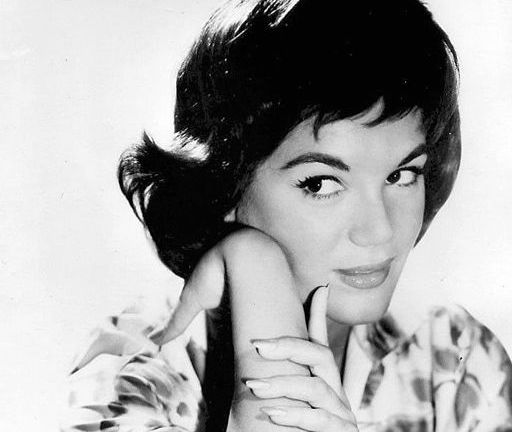
As a child of the 1980s, one might expect me to have spent my youth listening to the likes of Cyndi Lauper, Pat Benatar, Whitney Houston and Madonna.
Instead, I opted for Connie Francis, the internationally-renowned hit-maker and record-breaker whose voice soared on classics like “Who’s Sorry Now,” her 1958 breakout hit, and “Where the Boys Are” – and who passed away this week at age 87.
I didn’t only enjoy her tunes on my mother’s stereo, belting along in the safety of home under the bright-peach glow of mom’s bedroom vanity lights. My earliest public performances saw me singing Francis’ songs to audiences of perplexed fellow children and bemused adults. The Girl Scouts talent show where I sang “Stupid Cupid” in a homemade poodle skirt; the in-school performance of “Lipstick On Your Collar” to a lunchroom packed with elementary school kids, an age group whose tendency toward mockery was eclipsed by the pure fun of the song itself.
That’s the sort of icon Francis was. One who reached through time with a sharp musical mind, a soulful tone, and an emotional clarity that made her deeply human – and deeply relatable.
And while she may not be a modern-day household name in the way that, say, Taylor Swift and Beyoncé are, as the first woman artist ever to top the Billboard Hot 100, she certainly paved the way for them to follow in her footsteps. In fact, her songs could frequently be found on and atop the charts, both in the U.S. and abroad.

That said, Francis did find her way to the center of several modern-era moments. Fans of the hit animated show “Futurama” will recognize her voice on “I Will Wait For You,” the song scoring one of the show’s most memorable, most crushing moments. (I won’t spoil it, but it is indeed a gut punch, in no small part because of her crooning contribution.) And just recently, her hit song “Pretty Little Baby became a TikTok sensation when users began setting videos of cute animals to it. Prominent media personality and entrepreneur Kylie Jenner even lip synced to the classic.
But her catalog extends well beyond those flashier moments. A prolific and versatile musician, Francis’ discography spans both genres and language barriers, as she recorded everything from 50s rock tracks, ballads and torch songs to jazz tunes, waltzes and Broadway standards, and did so in English, German, Italian and numerous other languagess.
All of that said, not much came easy to Francis. Her very early musical start, when she was known as Concetta Franconero, and her natural abilities did not combine to create immediate superstardom – in fact, her earliest commercial releases were flops. But then, her rendition of “Who’s Sorry Now,” a cover of a 1923 tune, was featured on Dick Clark’s then-widely-popular music and dance show, “American Bandstand.”
After that, from the late 1950s to the mid-1960s, Francis reigned. Not only was she the first woman to top the charts, she was the first woman to do so several times over.
Then, the rise of girl groups such as the Supremes, the Ronettes and the Chiffons, as well as individuals like Brenda Lee and Lesley Gore, saw Francis fading toward the background of the American music landscape at the time. But she did continue to record and perform – until a series of tragedies took a huge toll on her career and well-being for the better part of a decade.

She suffered a brutal sexual assault in which she nearly lost her life in November 1974 – a case that made headlines. Years of depressed seclusion followed the attack, until she at last ventured back into music – only to be robbed of her voice for three years following a nasal surgery performed in 1978. Her brother was assassinated for informing on Mafia members in 1981, just as she was, at last, recovering.
Rather than push her back into hiding, that last loss made her “angry, and angry is often a good catalyst,” she told The Mercury News in a 2010 interview. Seeking catharsis, she turned to music, and began recording and performing again. However, a misdiagnosis of manic depression would stall her aspirations once more, as she was committed to psychiatric hospitals and prescribed a litany of pills that “made me a zombie,” she said when speaking with The Village Voice about that experience in 2011.
Amid the fame, and the tumult, Francis was also married, then divorced, four times over, before entering into a long-term relationship with record exec Tony Ferretti (until his death in 2022).
Through it all, Francis continued to use her voice – to sing, and to speak out, telling her story in a New York Times best-selling autobiography, “Who’s Sorry Now?,” and serving as the spokesperson for Mental Health America’s trauma campaign, among other causes.
For her work, in all its forms, she’s remembered fondly – by fans and luminaries alike. Performer Pat Boone called her “one of the sweetest, most beautiful and best-singing girls I’ve ever known, and I’ve known quite a few.” Singer Deanna Martin acknowledged her “broken heart” at Francis’ death, thanking her for “a lifetime of music and laughter.” Actor Mario Cantone summed her up as “the greatest.”
And songwriter Neil Sedaka, who co-wrote “Stupid Cupid” and “Where the Boys Are,” told The New York Times that “what struck me was the purity of the voice, the emotion, the perfect pitch and intonation. It was clear, concise, beautiful. When she sang ballads, they just soared.”
I think that’s what resonated with me in those tender, explorative childhood years, when I found my own voice and presence through hers.
Because that’s what the real greats, the truly timeless ones, tap into – potent yet utterly relatable emotion. Something in my developing heart and mind recognized how special Francis’ vulnerability was, and her ability to channel it into full, heart-forward singing. She just poured so much into every note. And reflecting upon the pain she endured – and how she found her way back to her voice time and time again – I’m struck even more by her enduring bravery and boundless creativity.
I wish I could have somehow thanked her for paving the way to my own love of performing, which endures to this very day in the form of a love-filled career in music. But I’m gladdened by the idea that she spent her final months watching new generations find joy and delight, as I did, in her work – in the very sound of her.
On one of her many songs, Francis sang out: “Someday, baby… someday, darlin’… you’re gonna miss me.” How right she was. ◼️