

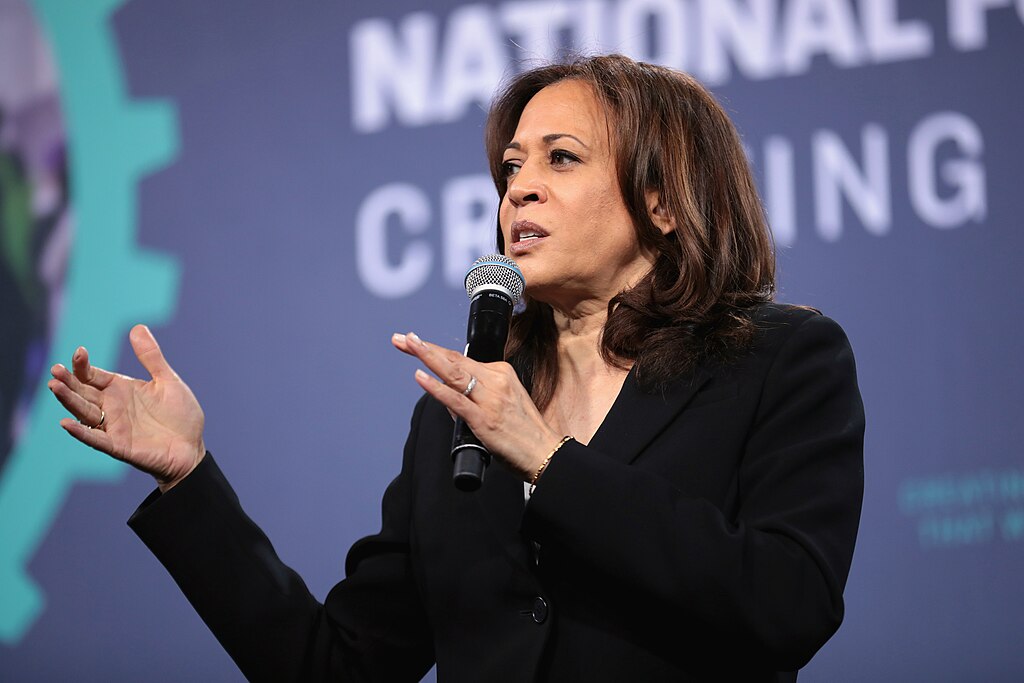
Former Vice President Kamala Harris had much to say in “107 Days,” her recently released tell-all tome about her record-breaking campaign for the U.S. presidency.
Headlines have poured out regarding its numerous disclosures. What stood out to me, however, was a far less salacious admission than the ones generating buzz: Harris wanted this job.
And she wasn’t shy about it. “I now know that there is only one apprenticeship for President of the United States, and that is being Vice President. I’d been a heartbeat away for three and a half years,” Harris wrote. “I knew the job; I knew I could do it. I wanted to do it.”
“I wanted to do the work,” she continued. “I wanted to keep people safe, and help them thrive.”
Qualms about her policy stances aside, it’s hard to disagree with the assertion that she was uniquely ready for the role. In addition to shadowing the presidency for years, the former lawyer served first as attorney general, then later senator of the state of California. Besides former Secretary of State Hillary Clinton, it’s hard to imagine anyone more prepared for the job than Harris.
Yet President Donald Trump won. Trump – who, outside of his first presidential term, brings only a lifetime of questionable real estate dealings, television hosting experiences and numerous allegations and indictments of wrong-doing to the job.
It’s maddening – and for women the world over, exhaustingly familiar.

A Problem Top to Bottom
Last month, we asked women to tell us (anonymously) about their wants and needs – and to tell us what’s holding them back from achieving them.
We were inspired to do so by Moms Demand Action founder Shannon Watts and former tennis superstar Serena Williams, who had both publicly posed the question themselves. “Men are socialized to follow their desires. Women are taught to fulfill their obligations,” Watts noted while promoting her new book, “Fired Up.” We couldn’t agree more.
So, we wondered: What are women’s desires? And what do they need to get what they want? While many who responded to our callout cited personal goals and desires – a driven teenager who feels dismissed because of her age, time and time again; a widow drowning under the responsibilities of single working parenthood – many others spoke of broader, simpler wants.
Things they shouldn’t have to wish for in the first place.
“What do I want? I want freedom. The kind of freedom where I can live fully in my power, on my terms, while creating a generational impact,” one respondent wrote. “What do I need to achieve it? I need space. I need support that doesn’t require me to explain my vision ten times over.”
“I yearn for a world where opportunity isn’t reserved for those who fit a narrow mold, but is accessible to anyone with talent and drive, regardless of background, gender or ethnicity,” another said. “I feel disillusioned with the world’s promise of social mobility.”
That’s because it’s a broken promise for women in 2025. Mental health struggles, thwarted advancement opportunities, a persistent pay gap, motherhood penalties and workplace sexual harassment still combine to make advancement into impossibilities within our existing structures.
A third respondent summed up the desire for an easier, more just path. “I think the answer to this question is as simple as it is complex,” she said. “We want peace” to pursue our desires and dreams – “how we get it is the hard part.”

What If We Build It?
One woman we spoke with evoked “Exit Interview,” a 2023 memoir by former Amazon executive Kristi Coulter. The book details the pressure and burnout that came with being a woman with dreams in an industry that does not support them.
At one point, Coulter talks about “freedom of the truly f*cked” – or, the liberation that can come from accepting that the status quo does not serve us, in pursuit of finding an alternative. And doing so with utter abandon.
One of our other callout respondents echoed this sentiment. “I have come to realize that I don’t want to be part of a system that doesn’t work for most people, and is especially unkind to women with outdated expectations and narratives.”
We’ve seen women reimagine these systems before – such as women business owners who push back against the pressures of capitalism by building companies that defy the economic system’s norms.
Harris herself has the same thoughts. Toward the end of “107 Days,” as she grapples with her loss to Trump, she says, “I wanted a seat at the table. I wanted to make a change from inside the system.” But “today, I’m no longer sure about that. Because the system is failing us. At every level … every single guardrail that is supposed to protect our democracy is buckling.”
“In this critical moment, working within the system, by itself, is not proving to be enough,” she continues. Instead, she proposes a return to hearing one another – in particular, the voices most often silenced by our current systems – that we might make new plans, build new structures, out of the ideas born of those conversations.
Because the old ways no longer serve us – so they, and their proponents, simply must go. ◼️