

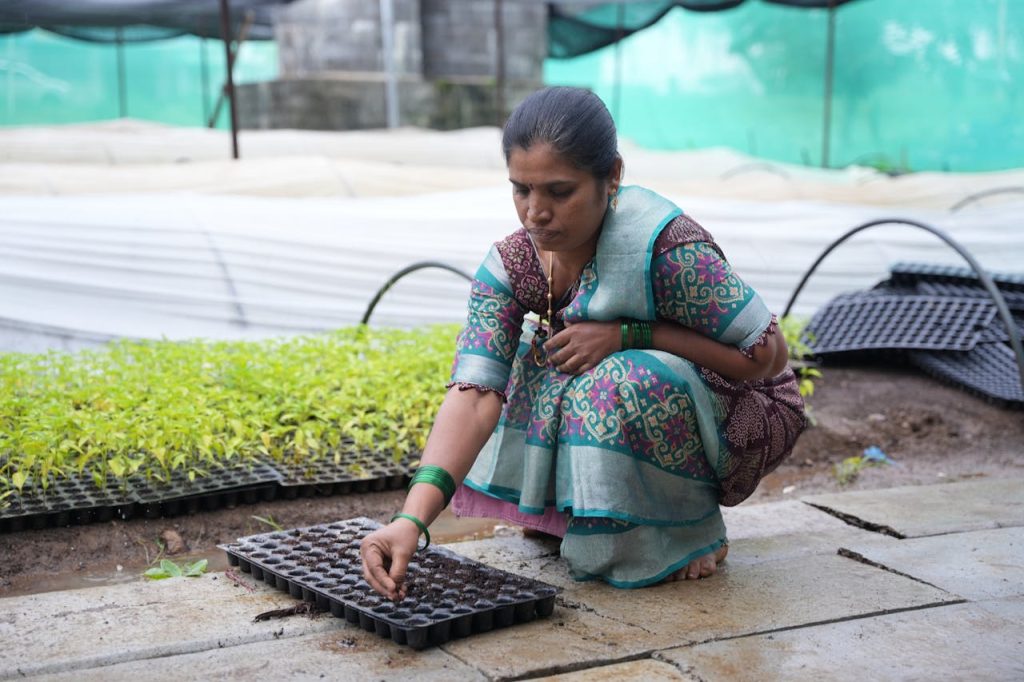
It’s well-documented that climate change disproportionately impacts women. When there’s extreme weather or disasters, women face higher mortality rates, greater chances of gender-based violence, increased caregiving responsibilities and more economic instability. Crafting solutions that center women could make a global difference.
That’s according to UN Women, which ahead of this year’s Earth Month called 2026 a “pivotal opportunity to advance gender equality in the global environmental agenda.”
In an article on its site, the organization noted that “the climate crisis is not ‘gender neutral’,” and that “the lived experiences, rights, and meaningful participation of all women and girls – especially those in frontline communities – must be kept front and center as we work towards a healthier, safer and more equitable world for all.”
UN Women’s focus follows a 2025 report from United Nations Climate Change, which detailed a decade-long roadmap for combating climate change in ways that center women’s needs and perspectives. “Stronger climate action delivers huge benefits for people in their daily lives. More jobs, more economic opportunities and lower health costs. Applying a gender-responsive approach ensures that those benefits are shared equally,” said Simon Stiell, executive secretary of UN Climate Change.
Women-focused solutions include tapping into Indigenous women’s expertise to improve regional food security, weaving inclusivity into clean energy job creation, and developing low-carbon transportation solutions that help women, in particular, get around.

The commitment to frame the climate change fight in this way was first made in 2024 at COP29, when nations at the conference decided to extend the Enhanced Lima Work Program on Gender and Climate Change, a plan initially conceived as a three-year effort to mitigate the growing problem. “[This] decision acknowledges the critical role of gender mainstreaming into all relevant goals and targets,” officials said at the time. “This integration is seen as contributing towards enhancing the effectiveness, fairness and sustainability of climate policy and action.”
In recent years, research has demonstrated how a changing climate increasingly harms women’s economic prospects, autonomy – and lives.
For example, a 2024 analysis by the Association of American Medical Colleges found that women, internationally, are more likely to be injured or killed by extreme weather events – usually due to lack of prenatal care and upticks in sexual violence. “After extreme weather events, risks to women go way up, and they go up in many different ways,” Cecilia Sorensen, director of the Global Consortium on Climate and Health Education at Columbia University, told AAMC at the time.
Not that President Donald Trump’s administration is taking any of it seriously here in the U.S. During his second term, he has signed executive orders that aim to prohibit states from enacting laws to curb fossil fuel use, while also calling for an increase in coal production. It’s part of a broader push during his second tenure to undo American efforts against climate change, which also includes pulling out of the Paris climate agreement.
All the more reason to strategize by centering women in the climate fight, international researchers agree.
UN Women said it will promoting “inclusive and equitable gender action plans” throughout the year, including three upcoming summits — the COP17 on desertification in Mongolia in August, the COP17 on biodiversity in Armenia in October, and COP31 on climate change in Turkey in November.
“It has never been clearer: Climate change, biodiversity loss and desertification are making our economies, our health, and progress on gender equality more precarious,” the organization said. “There is a path forward: just transitions away from economies and societies dependent on fossil fuels and harmful environmental practices – and towards greater sustainability and gender equality.”

Editor’s Note: This post, updated for 2026, was originally published April 9, 2025.