

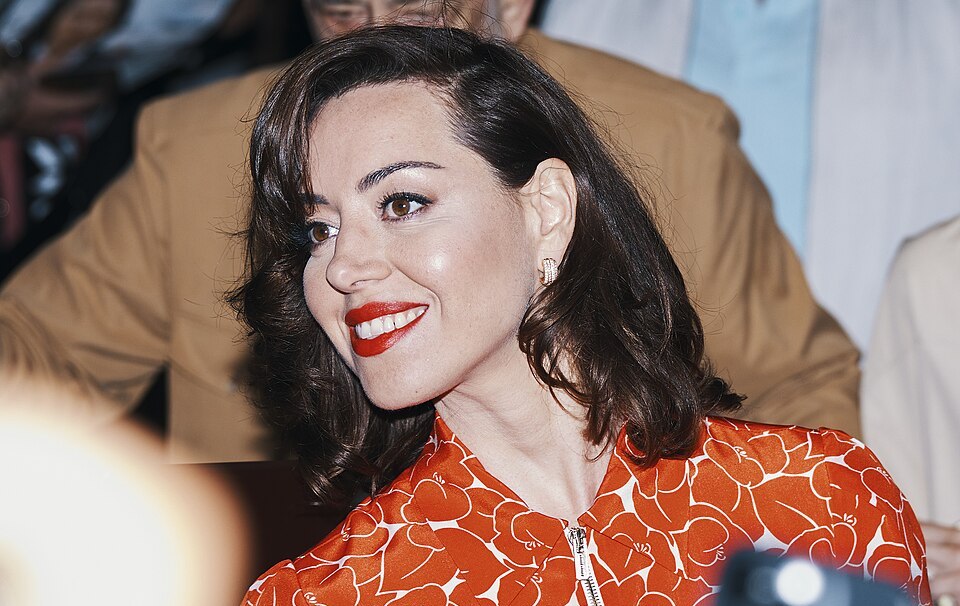
This week, the world learned that Aubrey Plaza is pregnant with her first child.
The 41-year-old actress confirmed that she and partner Chris Abbott, also a performer, will be having a baby together this fall. It’s good news for Plaza, who had been rocked by the loss of her estranged husband, Jeff Baena, to suicide in January 2025.
While appearing on Amy Poehler’s “Good Hang” podcast late last summer, Plaza spoke about her grief over Baena’s death. She likened the experience to “a giant ocean of awfulness.” She added that “sometimes, I just want to dive into it, and just, like, be in it. Then sometimes, I just look at it. And sometimes, I try to get away from it.”
Either way, Plaza concluded, “it’s always there.”

But now, it appears she has found some level of happiness after weathering that pain and confusion. Grief persists, of course – but we still exist, and eventually, we do start living again.
Not that the general public is concerned with such things, of course.
The announcement of her pregnancy was met by a wave of social media users branding Plaza as heartless for being with Abbott, and being pregnant with Abbott, after the loss of her former partner. (Whom, it should be noted, she had been separated from for months before his death.) As if a stranger’s comfort with her life should even matter.
But in rather callous terms, people felt comfortable all the same expressing that they felt Plaza had been a bad partner to Baena in hindsight, that Hollywood had rendered her unfeeling… that she is a terrible human being for finding a new love and building a family with him. Comment after comment after comment derided her for the act of moving forward. Even the New York Post centered Baena’s death in their coverage of her pregnancy.
First things first: Shall we look at the numbers around how men handle illnesses in, and the deaths of, their female partners?
Because research tells us that men are six times more likely than women to abandon partners who fall gravely ill, and are 42% more likely to have remarried within two years following the death of a partner than women are. Those tempted to scrutinize Plaza’s timeline should keep in mind that men are study-proven to move on from such struggles and losses at far faster rates.
The bigger truth, though, is that it isn’t our business how a person navigates that “giant ocean of awfulness” one finds themselves in when grief comes, regardless of their gender. There’s no socially agreed-upon timeline of propriety when it comes to how long a person must mourn, or how long someone must be alone after a death before they are “allowed” to start imagining, even building a new life.
But as is often the case in our society, stemming back to Victorian times, when a widow was expected to wear black for years after her husband’s death, there is disproportionate pressure heaped upon women to publicly show their grief. That expectation – particularly when it appears in the wasteland of social media comments – often comes from people who have been lucky enough not to suffer such profound losses themselves.

On Poehler’s podcast, Plaza summed up her experience with grief, up to that point, as an exercise in simply putting one foot in front of the other. “Overall, I’m here and I’m functioning. I feel really grateful to be moving through the world. I think I’m okay. But it’s, like, a daily struggle – obviously.”
If a person, especially one whose work has brought joy to others, has found some modicum of peace and hope for herself after living in survival mode, that’s something to celebrate – not deride.
Or, if one simply can’t handle that, there’s always the option of minding one’s business. ◼️