

Editor’s Note: In honor of Women’s History Month, we’re sharing profiles of remarkable female activists from American history we think you should know (if you don’t already).
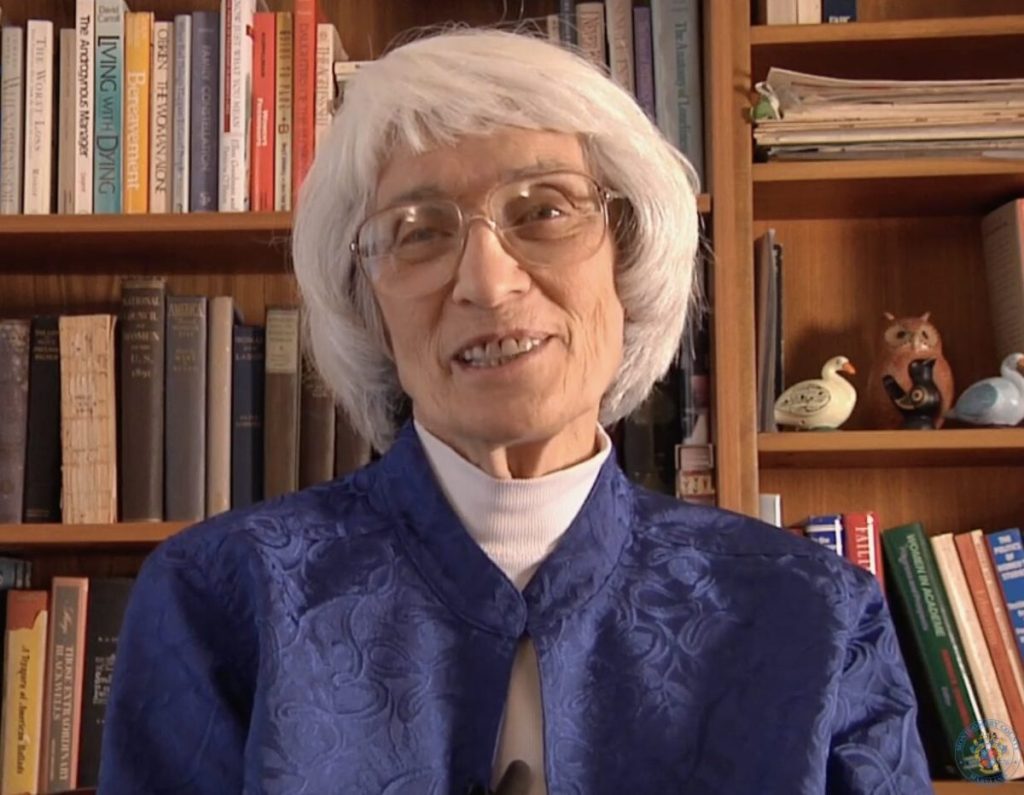
In 1969, Bernice Sandler had just finished her doctorate at the University of Maryland and was applying for one of the open teaching positions in her department. Despite her qualifications, Sandler was repeatedly rejected during the application process – which prompted her to ask a male faculty member why. He told her, “Let’s face it, you come on too strong for a woman.” Sandler later wrote about the incident in a 2007 article for the Cleveland State Law Review, “I did not know it at the time but those five words…would not only change my life,” but also, “the lives of millions of women and girls because they would ultimately lead to the passage of Title IX.”
Sandler was born in 1928 in Brooklyn, New York, to Jewish immigrants from Russia and Germany. She was a devoted student who studied psychology, earning degrees from Brooklyn College and City College of New York. During the 1950s, married with two children, she put her academic career on hold e to raise her children, working odd jobs as a secretary, research assistant, and nursery school teacher to bring in extra income.
Once her children were older, however, she finally earned that doctorate degree – and was told that “too strong” line Sandler later wrote of that day, “I went home that night and I cried. I blamed myself for speaking up a few times at staff meetings…I regretted my participation in classes as a graduate student.” She added, “I accepted the assessment that I was, indeed, ‘too strong for a woman.’”
Sandler began to look for answers. She said in a 2012 interview for the Montgomery County Maryland Hall of Fame:“It took me a while to realize [sex discrimination] was what it was, and then I got mad. . . . And then I became inspired.” Sandler was a self-proclaimed great believer in bibliotherapy – that is, reading books to improve one’s mental health. “When things go wrong in my life, I start to read about the problem…so I began to read about the law and sex discrimination.”
She immersed herself in research about discrimination against women in academia. It was in a report about a presidential executive order barring federal contractors from discriminating on the basis of race, religion or national origin that she found a few lines that would transform her cause. Sandler wrote in 2007, “There was a footnote, and being an academic, I quickly turned to the back of the report to read it.” She found that the footnote said, “In 1968, President Lyndon B. Johnson had amended Executive Order 11246 to include discrimination based on sex. And because most universities and colleges had federal contracts, the order applied to them.” It was a eureka moment. “Even though I was alone, I shrieked aloud with my discovery,” Sandler wrote.
The discovery paved the way for Sandler to file class-action lawsuits against colleges and universities nationwide. With the help of Vincent Macaluso, the director of the Office of Federal Contract Compliance at the Department of Labor, and the Women’s Equity Action League (of which she was a member), Sandler brought over 250 lawsuits against higher education institutions across the country.

Sandler’s tireless work ultimately led to Title IX of the Education Amendments of 1972, which was signed into law by President Richard Nixon. The act not only made it illegal to discriminate on the basis on sex in colleges and universities – the legislation also extended to athletics and employment discrimination.
After her historic win, Sandler spent the rest of her life advocating for women’s rights. She served on the National Advisory Council on Women’s Educational Programs from 1975 to 1982, and was personally appointed by both Presidents Gerald Ford and Jimmy Carter. Sandler helped found the Project on the Status and Education of Women in 1971. She served as a consultant for the Citadel, when the military school began to integrate women into its corps of cadets in 1995.
In 2012, when Sandler was reflecting on the legacy of Title IX while speaking to NPR, she said she beamed with pride knowing how her work would open new doors for women and make them feel like, “I can handle this world.” ◾