

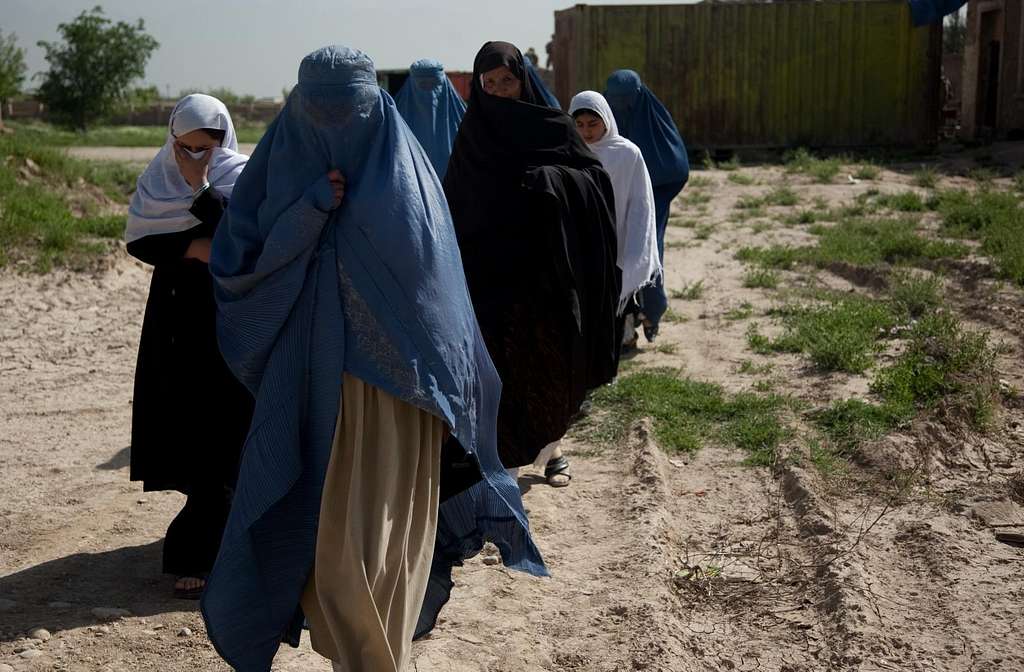
The situation for women in Afghanistan has just become even more dangerous, and dire.
In a new decree, the Taliban has stated that men are permitted to beat their wives – as long as there are no broken bones or visible signs of injury.
“If a husband beats his wife so severely that it results in a broken bone, or an open wound, or a black-and-blue wound appears on her body, and the wife appeals to a judge, then the husband will be considered an offender,” the ruling additionally states, according to CNN. “A judge should sentence him to 15 days’ imprisonment.”
The punishment for animal abuse is far more severe, experts said.

Since women aren’t permitted to leave their homes without male accompaniment, those working for human rights around the world have pointed out that women in Afghanistan are now essentially left without recourse following their abuse. “The men have the right to rule completely the women,” activist Mahbouba Seraj told CNN. “His word is the word of law – that’s it.”
Since returning to power in 2021, when U.S. military forces withdrew from the country, the Taliban has issued a series of rulings that have made life for women in Afghanistan increasingly difficult – stripping them of their rights to learn, to make a living, and even to sing.
Last summer, the International Criminal Court issued arrest warrants for several top Taliban officials, accusing them of “severely depriving, through decrees and edicts, girls and women of the rights to education, privacy and family life and the freedoms of movement, expression, thought, conscience and religion.”
Women have been finding ways to bravely push back over these past few years despite this, in whatever ways they’re able: Participating in the 2023 Asian Games, learning in secret, singing in defiance.
But this latest edict adds a disturbing new layer of oppression and suffering to their lives, further curtailing what little freedom they’d had. “When you have these kinds of laws being implemented and the husband can decide on everything – then forget it,” Seraj noted to CNN.
“At least before there was a fear of the courts, judges. Women would complain,” she continued. “Now what?”